
Do you love the satisfying click of a perfectly placed puzzle piece or the quiet concentration of solving a tricky Sudoku? If you’re a fan of our word search puzzle books or our challenging Samurai Sudoku books, you already know the cognitive joys of puzzling. But what if we told you there’s an entirely different realm of puzzles that engages your senses in a unique way, offering profound benefits for your fine motor skills, dexterity, and even your patience?
Welcome to the world of haptic puzzles – where touch isn’t just a sense, it’s the key to unlocking success.
What Does “Haptic” Mean?
The word “haptic” itself comes from the Ancient Greek word haptikos, meaning “tactile” or “pertaining to the sense of touch.” In essence, it refers to anything related to the sense of touch and the perception of sensations through physical contact. While we often think of touch as simply “feeling something,” haptics specifically involves active touch – the exploration of objects through manipulation, pressure, and movement, where our hands are actively gathering information from the environment.
You might have already encountered haptics in your daily life without realizing it. The subtle vibrations your smartphone makes when you type, the rumble in a game controller, or even the feedback you get from a modern car’s touchscreen when you press a “button” are all forms of haptic technology designed to provide tactile feedback.
What Exactly Are Haptic Puzzles?
Unlike traditional visual puzzles that rely heavily on what you see, haptic puzzles (also known as tactile puzzles) are specifically designed to be solved primarily through touch, feel, and the subtle physical feedback they provide. Your hands become your primary tools for perception, interpreting textures, shapes, resistances, and movements that might be invisible to the eye, or at least secondary to the tactile experience. They demand a high degree of hand-eye coordination, even when your eyes aren’t directly involved, as your fingers become your primary tools for perception.
Is this an “underground” type of puzzle? How do people get into it?
While not as mainstream as jigsaw puzzles or crosswords, haptic puzzles are far from “underground.” They occupy a fascinating niche in the broader puzzle world and are gaining popularity as people seek new and engaging ways to challenge themselves.
Many people are initially exposed to haptic puzzles through:
- Curiosity and Online Videos: The rise of online content has made activities like lock picking demonstrations incredibly accessible. People stumble upon videos showing the intricate mechanics of locks or the satisfying click of a successful pick, sparking their interest.
- Gift-Giving: A well-chosen disentanglement puzzle or a beginner lock picking set can make for a unique gift that introduces someone to this tactile world.
- Occupational Therapy/Rehabilitation: These types of activities are sometimes used therapeutically to improve dexterity and sensory integration, thereby introducing individuals to their benefits in a guided setting.
- Hobby Shops and Specialty Stores: Walking into a well-stocked puzzle store or a general hobby shop can reveal these unique items, distinct from the usual offerings.
- Online Communities: Engaging with online puzzle forums (like those for mechanical puzzles or lock picking) often introduces newcomers to the wide array of haptic challenges available and provides a gateway into the community.
These puzzles aren’t just novelties; they’re powerful tools for enhancing physical and mental capabilities. Let’s explore some common types:
Common Types of Haptic Puzzles and What Makes Them Unique
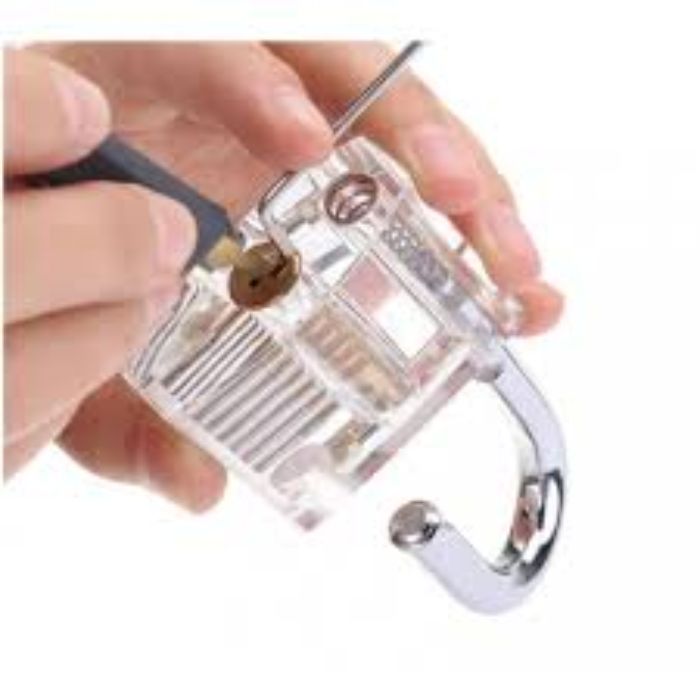
- Lock Picking
- Description: This might sound illicit, but legitimate lock picking sets and practice locks are widely available for hobbyists. It’s a fascinating puzzle that requires incredibly precise movements, a delicate touch, and the ability to “feel” tiny tumblers fall into place. Each click, subtle shift, and change in resistance from the pins and springs provides crucial haptic feedback. It’s a true test of patience and micro-dexterity.
- Key Haptic Elements: Feeling the spring tension, distinguishing the “set” of a pin, sensing counter-rotation, and the final satisfying “clunk” when the lock opens.
- Typical Cost: Beginner lock picking sets, often including several picks, tension wrenches, and even transparent practice locks (so you can see the internal mechanics), typically range from €20 to €50, (approx. $22 – $55 USD) depending on the number of tools and quality. More advanced sets can go significantly higher.
- Where to Find: Online retailers like Amazon, specialist lock picking supply websites (e.g., UK-based sites like UKBumpKeys – remember to check international shipping options!), and some larger hobby or DIY stores.
- Disentanglement Puzzles (Metal/Wire Puzzles)
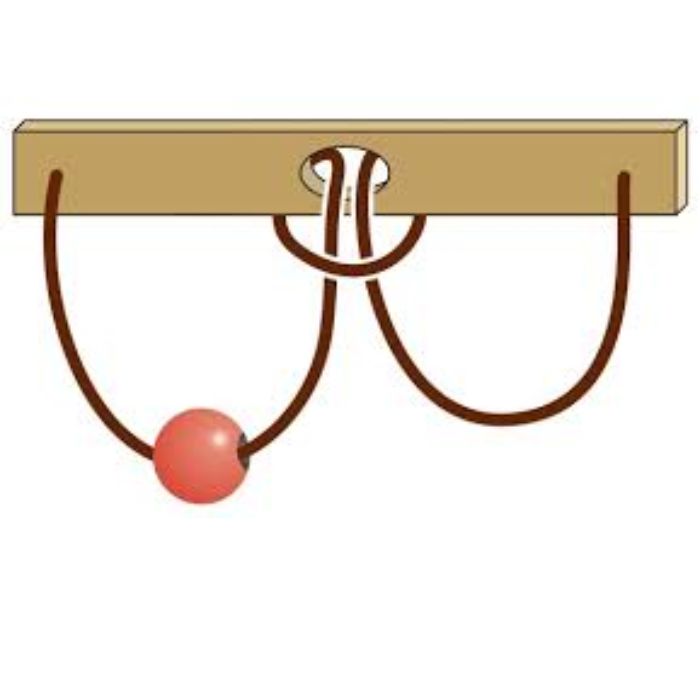
- Description: These puzzles, often made of intricate metal or sturdy wire, challenge you to separate interlocking pieces or to remove a loop from a convoluted design. They rely less on visual patterns and more on manipulating parts by feel, finding the right angles, twists, and sequences through trial and error. The satisfying ‘clink’ or ‘slide’ of pieces moving correctly is a core part of the haptic experience.
- Key Haptic Elements: Feeling for resistance, sensing smooth vs. jammed movements, distinguishing subtle shifts in the puzzle’s balance, and the sound of metal on metal.
- Typical Cost: High-quality metal disentanglement puzzles, especially those from renowned brands like Hanayama Cast Puzzles, typically cost between €14 and €30 (approx. $15 – $33 USD) each, varying by complexity and size.
- Where to Find: Dedicated puzzle shops, larger toy stores, museum gift shops, and a wide array of online retailers.
- Burr Puzzles (Wooden Interlocking Puzzles)
- Description: These 3D wooden puzzles consist of several interlocking pieces that form a specific shape, usually a “burr.” The goal is to disassemble the puzzle and then reassemble it. While some simpler burr puzzles can be solved visually, the more complex ones often require feeling for the precise piece to slide out or rotate, relying on incredibly subtle tolerances and friction. They demand careful, deliberate movements.
- Key Haptic Elements: Sensing the friction between pieces, the ‘give’ or ‘stick’ of a correctly or incorrectly moved piece, and the satisfying way the wood slides when the right move is found.
- Typical Cost: Wooden burr puzzles can vary widely in price based on size, complexity, wood quality, and craftsmanship. Smaller, simpler ones might be €10-€20 (approx. $11 – $22 USD), while larger, hand-crafted, or very complex designs can range from €30 to over €100 (approx. $33 – $110+ USD).
- Where to Find: Artisan craft fairs, specialty puzzle stores, independent toy shops, and online marketplaces like Etsy or dedicated puzzle websites.
- Blindfold Mazes/Labyrinths
- Description: These can range from physical boards with raised pathways that you navigate with your fingers or a stylus, to more abstract team-building exercises where individuals are blindfolded and guided verbally through a physical maze. The core principle is navigating solely by touch and auditory cues, without visual input.
- Key Haptic Elements: Feeling the texture of the path, sensing edges and turns, interpreting subtle pressure on a stylus, and relying on auditory feedback from others (in group settings).
- Typical Cost: Smaller, individual blindfold mazes for personal use can be relatively inexpensive, perhaps €10-€30 (approx. $11 – $33 USD). Larger, more elaborate maze kits designed for team-building or educational settings can be much more substantial, sometimes over €100 (approx. $110+ USD).
- Where to Find: Educational supply stores, therapy supply companies, some puzzle retailers, and online stores specializing in team-building games.
These puzzles aren’t just novelties; they’re powerful tools for enhancing physical and mental capabilities.
Beyond the Brain: Sharpening Fine Motor Skills and Dexterity
While all puzzles stimulate the brain, haptic puzzles offer a direct workout for your hands and fingers. This isn’t just about fun; it has significant, research-backed benefits, particularly in the realm of fine motor skills and dexterity.
Occupational therapy (OT), a health profession that helps people participate in the things they want and need to do through the therapeutic use of everyday activities, frequently incorporates tasks that enhance fine motor skills. These skills involve the coordination of small muscles, typically in the hands and fingers, in coordination with the eyes. Engaging in activities that require precise hand movements can lead to tangible improvements in various aspects of manual dexterity.
Haptic puzzles are exceptionally effective at honing these skills:
- Pincer Grasp and Precision:
- The Demand: Many haptic puzzles, especially lock picking, require you to hold tiny tools (like a tension wrench or a pick) or delicate puzzle pieces with incredible accuracy and maintain just the right amount of pressure. It’s about subtle control, not brute force. You learn to manipulate small objects with the very tips of your fingers.
- The Improvement: Consistent engagement strengthens the small muscles in your thumb and forefinger, improving the stability and control of your pincer grasp. This precision translates directly into everyday tasks like buttoning a shirt, using small utensils, writing neatly, or handling delicate objects.
- Tactile Discrimination:
- The Demand: This is perhaps the most unique aspect of haptic puzzles. You’re training your fingers to “see” what your eyes can’t. In lock picking, this means distinguishing the subtle “give” of a pin as it sets, feeling the texture of different metal pieces in a disentanglement puzzle, or sensing minute differences in resistance as a wooden burr piece shifts. It’s about interpreting highly subtle sensory feedback.
- The Improvement: Regular practice heightens the sensitivity of the nerve endings in your fingertips. Your brain becomes better at processing and differentiating between various textures, pressures, and vibrations, allowing for more nuanced and informed manual exploration of objects in your environment.
- Bilateral Coordination:
- The Demand: Most haptic puzzles, particularly lock picking, necessitate the simultaneous and coordinated use of both hands, often for different, complementary tasks. One hand might apply constant tension, while the other manipulates a pick with delicate movements. In many disentanglement puzzles, both hands are actively working together to twist, pull, and rotate pieces into alignment.
- The Improvement: This dual-hand engagement strengthens the communication pathways between the two hemispheres of your brain. It improves your ability to perform complex tasks that require both hands working in harmony, enhancing overall motor planning and execution.
- Hand-Eye Coordination (with a twist!):
- The Demand: While traditional hand-eye coordination involves visual input directly guiding your hands, with haptic puzzles, it’s often “hand-mind-eye” coordination. Even when your eyes aren’t directly on the precise point of contact (like inside a lock), your brain is constantly processing the spatial relationship between your hands and the object based on the tactile feedback. You are building an internal mental model of the puzzle based on touch, and your hands are executing movements based on this internal map.
- The Improvement: This trains a deeper level of proprioception (your body’s sense of its position and movement in space) and kinesthetic awareness (the sense of movement). It refines the brain’s ability to translate sensory input from your hands into precise motor commands, improving overall spatial reasoning and manual control even when visual cues are minimal.
According to various studies in occupational therapy, engaging in tasks that demand high levels of dexterity can significantly improve hand strength, coordination, and even sensory processing. For instance, research published in journals like the American Journal of Occupational Therapy (AJOT) often highlights the importance of manipulating small objects for rehabilitation and skill development.
The Patience Paradox: How Tactile Challenges Build Resilience
Haptic puzzles are rarely quick solves. They fundamentally demand persistence, trial and error, and a significant amount of patience. Unlike some digital puzzles where a hint button is always available, with haptic challenges, you can’t force a lock to open or a metal puzzle to untangle through sheer will. Instead, you must listen intently to the tactile feedback, subtly adjust your approach, and try again, often many times over, before a breakthrough occurs. This deliberate, iterative process cultivates a unique set of mental strengths:
- Frustration Tolerance: Embracing the “Almost There” Moments
- The Challenge: Haptic puzzles inherently involve moments of intense frustration. A pin might refuse to set, a piece might stubbornly remain stuck, or you might repeatedly feel like you’re on the verge of a solution, only for it to elude you. These puzzles teach you that immediate gratification is rare.
- The Growth: By consistently pushing through these moments without giving up, you actively build your frustration tolerance. You learn to manage disappointment, develop emotional regulation, and understand that setbacks are not failures but rather essential steps in the problem-solving journey. This resilience translates powerfully into overcoming challenges in everyday life and other complex learning endeavors.
- Focused Attention: Achieving a State of “Flow”
- The Challenge: To succeed with haptic puzzles, your mind must be fully immersed. Distractions are almost impossible when your fingers are trying to interpret minute vibrations or feel for an invisible seam. This intense focus pulls you away from external worries and demands your full concentration.
- The Growth: This deep engagement often leads to a state of “flow,” a psychological concept where a person is fully immersed in an activity, experiencing energized focus, full involvement, and enjoyment in the process. This not only enhances your ability to concentrate but can also reduce stress and anxiety, offering a meditative escape. Regular practice strengthens your capacity for sustained, deep focus, a valuable skill in an increasingly distracting world.
- Problem-Solving Through Iteration: The Scientific Method in Your Hands
- The Challenge: Haptic puzzles rarely have a single, obvious solution path. Instead, you constantly experiment. You try a small adjustment, observe the tactile feedback, learn from the result (whether it’s progress or a dead end), and then adapt your strategy. It’s a continuous loop of hypothesis, experiment, and analysis.
- The Growth: This iterative process fundamentally teaches resilient problem-solving. You learn to analyze complex tactile information, break down a seemingly insurmountable challenge into smaller, manageable steps, and systematically test different approaches. It’s much like deducing possibilities in a Samurai Sudoku grid, trying different combinations in a Kakuro puzzle book, or tracing paths in a Hidato puzzle. The crucial difference is the direct physical feedback, which makes the learning deeply experiential and memorable. You develop a robust mental framework for tackling any complex problem, understanding that “failure” is just data for the next attempt.
In a fast-paced, often-impatient world, the deliberate, unhurried nature of haptic puzzles offers a valuable mental reset. They train your mind to embrace the process as much as the outcome, fostering a profound sense of accomplishment derived from earned mastery.
Where to Discover Your Next Haptic Challenge
Intrigued by the unique tactile and mental workout that haptic puzzles offer? The good news is that these engaging challenges are more accessible than you might think!
As we explored earlier in this post, a wide variety of haptic puzzles await your discovery. From beginner lock picking sets (which often include transparent practice locks to help you visualize the mechanics) to the elegantly frustrating metal disentanglement puzzles (like those from renowned brands such as Hanayama Cast Puzzles), and the intricate craftsmanship of wooden burr puzzles, there’s a starting point for every level of interest and skill.
You can typically find these tactile treasures in a variety of places:
- Online Retailers: Platforms like Amazon are a great starting point for a wide selection of lock picking sets, disentanglement puzzles, and a range of wooden puzzles.
- Specialty Hobby & Puzzle Shops: Many dedicated puzzle stores, both online and physical (if you’re lucky enough to have one nearby!), which curate excellent collections.
- Craft Fairs & Artisan Markets: For beautiful, hand-crafted wooden burr puzzles, these markets are often treasure troves.
- Online Hobbyist Communities: Websites like Reddit (e.g., r/lockpicking for lock picking enthusiasts, or broader puzzle communities) are fantastic resources not just for recommendations on where to buy, but also for tips, advice, and connecting with fellow enthusiasts. They can guide you to reputable sellers and specific models.
Remember, starting your haptic puzzle journey is often as simple as a quick online search or a visit to a well-stocked hobby store. Dive in and discover a new dimension of puzzling!
Integrating Haptic Play into Your Life
Whether you’re looking to boost your fine motor control, enhance your focus, or simply find a new way to relax, haptic puzzles offer a unique avenue. They prove that not all puzzles reside on a page or a screen; some truly come alive in your hands.
So, next time you’re seeking a challenge that engages more than just your brain, consider picking up a practice lock, a tricky disentanglement puzzle, or a complex wooden burr. You might be surprised by the unseen benefits that unfold, one precise touch at a time.
Connect with Facts and Minds
If you enjoyed exploring the benefits of haptic puzzles, you’ll love our range of mind-sharpening books! From our 10 Word Search Puzzle Books (with fascinating facts!) that engage your vocabulary and general knowledge, to our 3 challenging Samurai Sudoku books that push your logical reasoning.
Word Search Puzzle Books https://factsandminds.com/word-search-puzzle-books/
Samurai Sudoku Books https://factsandminds.com/samurai-sudoku/